SEA OTTERS VS RIVER OTTERS
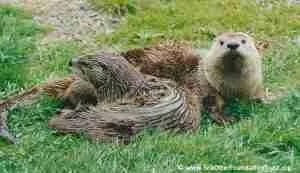
While river otters and sea otters might appear similar at first glance, the two exhibit many striking differences beyond their aquatic habitats. Although the term sea otter refers to only one species—Enhydra lutris—river otter applies to multiple species in the genus Lontra, which includes the well-known North American river otter (L. canadensis), as well as otters of the genera Aonyx, Hydrictis, Lutra, Lutrogale, and Pteronura. Sea otters and the various river otters are all members of the weasel family, Mustelidae.
1. Habitat and Geographical Range: Where Do Otters Live?
Sea Otters:

- Geographical Range: Sea otters (Enhydra lutris) inhabit the northern Pacific Ocean, stretching from the Aleutian Islands in Alaska to the central California coast.
- Preferred Habitats: Coastal waters — especially those abundant in kelp forests — are the preferred habitats of sea otters. These kelp forests provide a natural anchor that allows the sea otters to wrap themselves in kelp to prevent drifting while resting.
- Ecosystem Role: As a keystone species, sea otters play a pivotal role in preserving kelp forests. By preying on sea urchins, they help maintain the kelp ecosystem and prevent urchin barrens, which in turn supports a myriad of marine life.
River Otters:
- Geographical Range: River otters have a more extensive geographical range, spanning across North America, Europe, Asia, Africa, and South America. Unlike the sea otter, a single species in a narrow geographical range, river otters include 12 species spread around the globe.
- Preferred Habitats: River otters are adaptable and can be found in a variety of freshwater habitats, including rivers, lakes, ponds, and marshes. They favor pristine waters with abundant food sources.
- Ecosystem Role: By regulating fish populations and other aquatic organisms, river otters help maintain the balance of freshwater ecosystems.
2. Size : A Closer Look
3. Dietary Preferences: What Do Otters Eat?
Sea Otters:
- Primary Diet: Their diet mainly consists of marine invertebrates like sea urchins, clams, and crabs.
- Tool Use: Uniquely, sea otters are known to use tools, often employing rocks to crack open shellfish — a testament to their problem-solving abilities.
- Foraging Behavior: Sea otters have pouches of loose skin in their armpits that can be used for storing food, and they are known to float on their backs while eating.
- Preferred Swimming Method: Sea otters are unique among marine mammals in that they prefer to swim on their backs, using their chest as a platform to handle and eat their prey.
River Otters:
- Primary Diet: River otters have a diverse diet, consuming fish, crustaceans, and occasionally small mammals and birds.
- Foraging Behavior: They often hunt in groups and can traverse significant distances in search of food, moving overland between different water bodies.
- Preferred Swimming Method: River otters predominantly swim on their stomachs, using their streamlined bodies to navigate swiftly through their various habitats.
4. Social Structure and Behavior
Sea Otters:
- Social Groups: Sea otters are gregarious, often forming groups known as “rafts”. These rafts can range from a few individuals to several hundred and are typically segregated by gender.
- Resting Behavior: One unique behavior of sea otters is their habit of wrapping themselves in kelp to prevent drifting while resting.
River Otters:
- Social Groups: River otters are more solitary, and usually found in smaller family groups, with certain exceptions. However, during mating seasons or when a mother is nurturing her young, they can be observed in larger groups.
- Playfulness: They are renowned for their playful behavior, engaging in activities like mud sliding, snow sliding, and wrestling.
5. Swimming Style
While members of both otter subtypes love to swim, the swimming behaviors they engage in are quite distinct. Found in both saltwater and freshwater, a river otter lounges around riverbanks and swims with its belly down, keeping the majority of its body submerged below the water. Sea otters, conversely, are found only in salt water and rarely go on land. They even have the adorable habit of floating on their backs, even while they’re eating, and have been known to hold hands with each other while sleeping so they don’t drift apart from their pals!
Their swimming mechanisms are also a little different. While sea otters use their two webbed hind feet and tail to propel them through the water, the four webbed feet of river otters are what enable them to swim efficiently. Finally, river otters can dive to around 60 feet deep, whereas sea otters, remarkably, can dive to several hundred feet to forage for food.
6. Conservation Status and Threats
Both sea and river otters have historically been hunted for their fur. While legal protections have been put in place, challenges persist:
- Sea Otters: Vulnerable to oil spills, pollution, and conflicts with fisheries.
- River Otters: Threatened by habitat degradation, pollution, and in certain areas, illegal trapping.
Conservation organizations — such as the Sea Otter Foundation & Trust — are tirelessly working to safeguard these species, emphasizing habitat conservation and public education.

Komentar
Posting Komentar